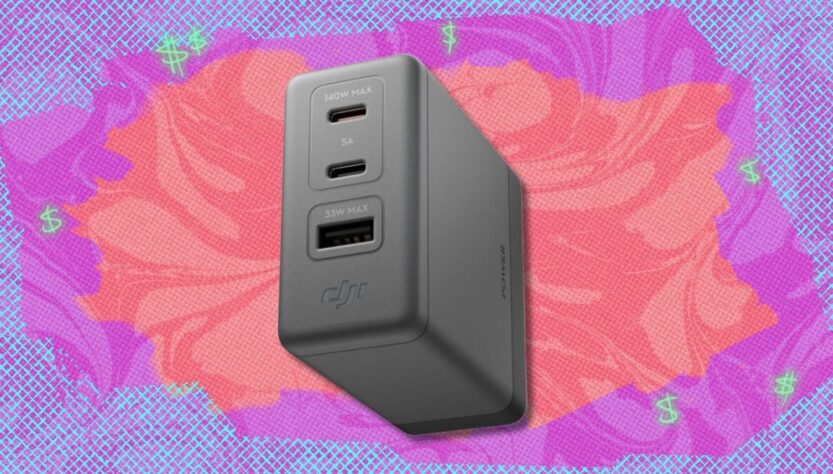
SAVE $10.50: The DJI Power 140W GaN Charger is on sale at Amazon for $59.49, down from the list price of $69.99. That’s a 15% discount.
$59.49
at Amazon
$69.99
Save $10.50
Our modern tech brings us plenty of joy. There’s getting real-time livestreams of concerts, chatting with family across the globe, and never being more than one click away from streaming your favorite movie. While plenty of this tech has made our lives easier, there’s a common complaint about a tech-ridden life: batteries die. Instead of dealing with multiple power bricks and charging cables, simplify the process thanks to this Amazon deal.
As of Aug. 13, the DJI Power 140W GaN Charger is on sale at Amazon for $59.49, marked down from the standard price of $69.99. That’s a 15% discount, taking $10.50 off the price.
DJI is a standout brand for content creation. From drones to the Mic Mini and the Osmo Pocket 4, DJI makes life easier, and the Power Charger plays to the same tune. With a 140W power delivery, the GaN Charger ups the game, offering smart temperature control and stable charging across all three ports.
Amazon has the DJI Osmo 360 Standard Combo on sale for almost $120 off
The DJI logo on the charger itself is actually an LED status indicator that lets you know when the charger is in use. DJI says this is an ideal charger for high-performance devices in the DJI ecosystem. The brand says it can recharge three DJI Air 3S batteries in under 180 minutes or three DJI Mavic 4 batteries in 240 minutes.
Mashable Deals
If you’re ready to streamline charging up life’s essential tech, consider the DJI Power 140W GaN Charger while it’s on sale for under $60.
PakarPBN
A Private Blog Network (PBN) is a collection of websites that are controlled by a single individual or organization and used primarily to build backlinks to a “money site” in order to influence its ranking in search engines such as Google. The core idea behind a PBN is based on the importance of backlinks in Google’s ranking algorithm. Since Google views backlinks as signals of authority and trust, some website owners attempt to artificially create these signals through a controlled network of sites.
In a typical PBN setup, the owner acquires expired or aged domains that already have existing authority, backlinks, and history. These domains are rebuilt with new content and hosted separately, often using different IP addresses, hosting providers, themes, and ownership details to make them appear unrelated. Within the content published on these sites, links are strategically placed that point to the main website the owner wants to rank higher. By doing this, the owner attempts to pass link equity (also known as “link juice”) from the PBN sites to the target website.
The purpose of a PBN is to give the impression that the target website is naturally earning links from multiple independent sources. If done effectively, this can temporarily improve keyword rankings, increase organic visibility, and drive more traffic from search results.